
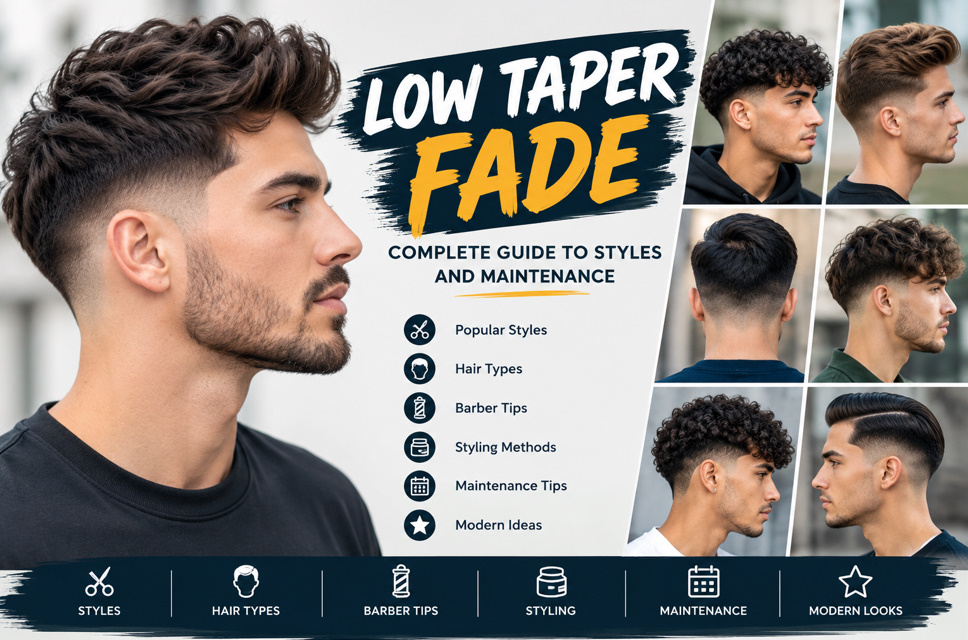
What Is a Low Taper Fade?
A low taper fade is a haircut that gradually reduces hair length around the sideburns, ears, and neckline while leaving more length across the upper sides and top. The transition stays low on the head, producing a clean yet subtle appearance that works well with many modern hairstyles.
The defining feature is the smooth movement from longer hair to shorter edges. Rather than creating a dramatic change across the entire side of the head, the low taper focuses on selected lower areas. This gives the haircut a natural appearance while still providing crisp, well-groomed edges.
- Low fade placement
- Gradual blending
- Clean sideburns
- Tapered neckline
- Fuller upper sides
- Smooth transition
- Flexible top
- Modern finish
Low Taper Fade vs. Low Fade
A low taper fade and a low fade may sound interchangeable, but their structures can differ. A low taper usually concentrates the shortest hair around the sideburns and neckline, keeping more of the side panel full. A low fade generally creates a wider faded section around the lower sides and back.
Knowing this distinction helps when explaining your desired haircut. If you want a subtle edge treatment with plenty of side fullness, ask for a low taper. If you prefer a more noticeable gradient across the lower sides, explain that you want a broader low fade.
- Compact transition
- Broader faded area
- Fuller side panel
- Lower fade placement
- Softer contrast
- Gradual blending
- Custom top length
- Different visual effect
Popular Low Taper Fade Styles
The low taper fade works as a foundation for numerous hairstyles. You can pair it with a textured crop, messy top, side part, fringe, waves, curls, or longer brushed-back hair. The taper keeps the lower edges neat while allowing the top to express different lengths, textures, and styling preferences.
A curly low taper can emphasize natural curl definition, while a textured version adds movement to straight or wavy hair. For a classic appearance, a side part or comb-over can create a structured finish. These variations make the haircut suitable for different personal styles and grooming routines.
- Classic low taper
- Textured low taper
- Curly low taper
- Wavy low taper
- Low taper crop
- Low taper fringe
- Side-part taper
- Longer-top taper
Low Taper Fade for Different Hair Types
One advantage of the low taper fade is its adaptability to different hair textures. Straight hair can be shaped with texture and volume, while wavy hair can showcase its natural movement. Curly hair can retain length and definition on top, creating contrast with the cleaner tapered edges.
Coily and dense hair can also work well with a low taper when the blend is adjusted to the natural hair pattern. Fine hair may benefit from strategic texturing and appropriate styling. Hair density, growth direction, curl pattern, and desired length should all be considered when planning the cut.
- Straight hair
- Wavy hair
- Curly hair
- Coily hair
- Thick hair
- Fine hair
- Dense hair
- Textured hair
How to Ask Your Barber for a Low Taper Fade
When requesting a low taper fade, clearly describe where you want the taper to appear. Explain that you want the blend kept low around the sideburns, ears, and neckline. Then tell your barber how much length you want to preserve on the sides and how you want the top styled.
A reference photograph can make communication easier, especially if you are getting your first taper fade. You can also discuss clipper guard lengths, neckline shape, sideburn definition, and the amount of contrast you prefer. Clear instructions help your barber create a haircut that matches your expectations.
- Say “low taper fade”
- Specify taper height
- Discuss side length
- Explain top length
- Mention neckline shape
- Describe sideburns
- Show a reference
- Confirm the blend
How to Style a Low Taper Fade
Styling a low taper fade mainly involves the hair on top because the tapered sections already provide a clean outline. Short hair may require minimal styling, while medium-length hair can be shaped using lightweight cream, matte clay, paste, or another suitable grooming product.
For textured hair, use your fingers to create separation and natural movement. A comb can help create a side part or smoother finish. Curly and wavy hair can be styled to enhance natural definition. Using a small amount of product generally provides control without making the hairstyle appear heavy.
- Start with clean hair
- Dry gently
- Use little product
- Finger-style texture
- Comb for structure
- Define natural curls
- Control frizz
- Avoid product buildup
Low Taper Fade Maintenance Tips
Like other fade hairstyles, a low taper gradually becomes less defined as new hair grows. The ideal maintenance schedule depends on individual hair growth and how sharp you want the edges to remain. A refresh every few weeks can help maintain the clean appearance of the neckline and sideburns.
Daily grooming can also extend the polished appearance between barber visits. Keep your hair clean, style the top consistently, and avoid making major changes to the taper yourself. If you need a quick refresh, a professional neckline and sideburn cleanup can restore definition without changing the overall haircut.
- Schedule regular trims
- Keep edges tidy
- Maintain sideburns
- Clean the neckline
- Wash appropriately
- Condition when needed
- Control product buildup
- Avoid uneven trimming
Why Choose a Low Taper Fade?
The low taper fade offers a balance between a modern fade and a natural haircut. Because the transition stays low, more hair remains on the upper sides, creating a softer overall appearance. This makes the style easy to adapt to different settings, from everyday activities to more polished occasions.
Its versatility is another major feature. The same taper can support short crops, curls, waves, fringes, side parts, messy textures, and longer tops. As your hair grows, you can change the styling without completely changing the haircut. This flexibility makes the low taper a practical choice for many preferences.
- Subtle appearance
- Clean edges
- Flexible styling
- Multiple top options
- Works with various textures
- Preserves side fullness
- Easy grooming
- Modern appearance